
ミリアム・カーン展覧会「STILL LEBEN」
「STILL LEBEN」Miriam Cahn
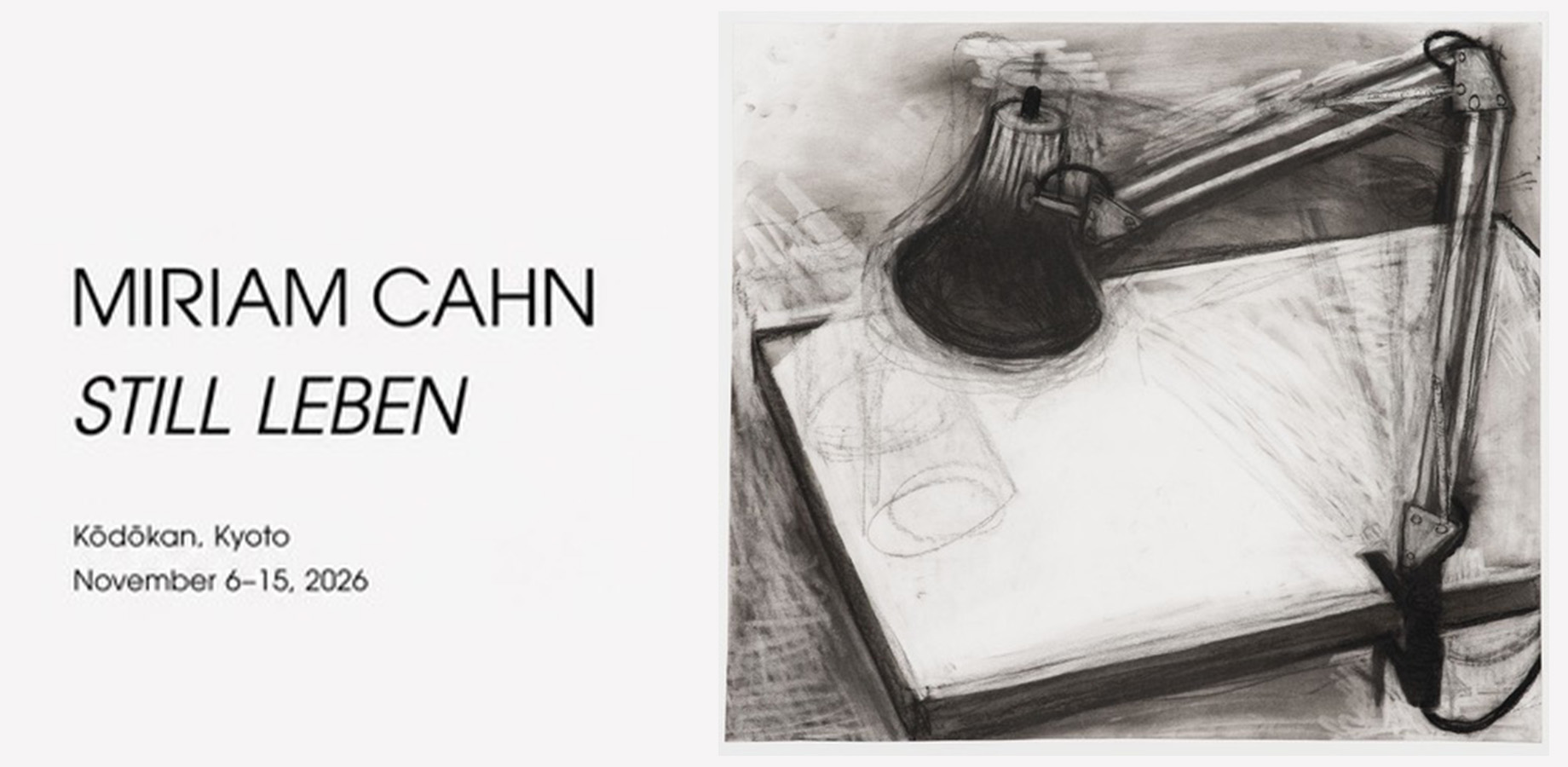
11月6日(金)~15日(日)の期間(11日(水)は休館)有斐斎弘道館にて、
スイスを拠点に活動する画家、ミリアム・カーンの展覧会を開催します。
社会や人間のあり方を見つめ、独自の表現を追求してきたミリアム・カーン。
その作品の世界に触れ、じっくりと向き合うひとときをお過ごしください。
会期中、ご予約制にて展覧会用に特別にあつらえた菓子と抹茶を茶室にてお召し上がりいただけます。
プロフィール
1949年スイス・バーゼル生まれ、スタンパ拠点の美術家。
具象絵画やパステル画を中心に、ジェンダーに基づく暴力、移民問題、武力紛争など、現代社会が抱える抑圧や不平等に向き合い続けている。
1970年代のフェミニズム運動から強い影響を受け、作品における「身体」を重要な表現媒体と位置づける。人間の身体を通して、社会の矛盾、内に秘めた感情、そして抑圧に対する抵抗を鮮烈に描き出す。
展覧会「STILL LEBEN」
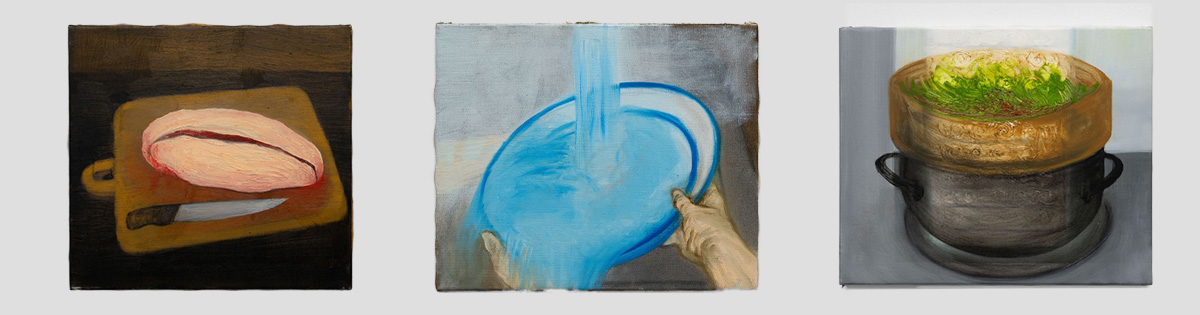
『STILL LEBEN』で、ミリアム・カーンは日常生活の「物」に目を向ける。腕時計、口の開いたハンドバッグ、傘、ベッド、鍋。これらの近作には、身体はほとんど描かれていない。その代わりに、物や室内、日常生活のありふれた情景が主題となっている。しかし、身体が消えてしまったわけではない。物を扱うために必要な身振りや、その使われ方、そして物が占める空間の中に、身体は確かに存在している。
弘道館での展覧会は、15 点の作品で構成され、その大半を近作の絵画やドローイングが占める。さらに、1975年、1983年、1987年に制作されたノート3冊も展示される。ベルリンのMeyer Rieggerで開催された「TRAUMBEFEHL」(2025–26年)、パリのGalerie Jocelyn Wolffで開催された「STILL LEBEN」(2026年)に続く本展では、カーンの近年の制作の方向性に、より親密なかたちで触れることができる。これらのノートは、もう一つの時間の尺度をもたらす。ノートが新しい作品のイメージを直接説明するわけではないが、カーンの制作活動において、身体的な行為としてのドローイングがいかに重要であるかを改めて思い起こさせる。
「Stillleben」は、ドイツ語で「静物画」を意味する言葉である。一方、これを「Still」と「Leben」という二つの語に分けると、「静かな生」という意味も浮かび上がる。しかし、ここに描かれているのは、一般に想像されるような静物画ではない。構図はほとんど整えられていないように見え、画面の切り取り方は直接的であり、ときには物が画面いっぱいに収まるほど近くから捉えられている。窓、葉のない木、デスクランプ、器に流れ落ちる水。絵画では、色彩が驚くほど鮮やかに輝くことがある。一方、鉛筆や木炭による作品では、光と影によって室内に重みが与えられている。どの物も、ほかの物より特別に重要なものとして扱われることなく、描かれている。
カーンは「le ménage」という概念について語っている。それは単に家庭を指すのではなく、洗濯や料理、物を片付けることなど、日々の暮らしを支える仕事をも意味する。こうした家事は、長い間女性に任されてきたが、その負担はしばしば見過ごされてきた。これらの物は、そうした労働を象徴しているのではない。それら⾃体が、その労働の⼀部をなしているのだ。手に取られ、置かれ、掃除され、運ばれる物なのだ。「TRAUMBEFEHL」で、カーンは、年老いた手からナイフがふと滑り落ちるかもしれないと語っていた。ごくありふれた動作でさえ、簡単にはできなくなることがある。これらの作品では身体が描かれていないことも多いが、身体に何ができるのか、そして何ができなくなるのかという問題は、すぐそばにあり続けている。
これらの作品には、物の間に序列はない。しかし、それぞれの物は固有の存在として描かれている。カーンは「Einmaligkeit」という言葉を用いている。それは、ありふれたものに見えても、私たちを取り巻く物がそれぞれ唯一無二であることを意味する。見慣れた物だからといって、別の物で代用できるわけではない。またカーンは、戦争や災害の際に家を離れざるを得なくなり、持ち出せるものだけを持って避難する家族についても語っている。そのような状況では、家財道具が、人とある場所やその歴史とを結びつけるものになることがある。これらの絵画が醸し出す静けさは、作品を現実世界から切り離すものではない。
弘道館では、作品の控えめなサイズによって、一点一点の絵に近づいて鑑賞することができる。また、Art Collaboration Kyotoでは、Meyer Riegger WolffとMISAKO & ROSENの共同ブースに、水道の蛇口とナイフを描いた2点の絵画が展示される。どちらの会場でも、カーンは文字どおり手の届く範囲にあるものに目を向けている。物の生、そして物を介して移りゆく人々の生に。
==========
With STILL LEBEN, Miriam Cahn turns towards the things of everyday life. A watch, an open handbag, an umbrella, a bed, a cooking pot. In these recent works, there are hardly any bodies. Instead, objects, interiors, the ordinary circumstances of living. Yet the body has not gone away. It is there in the gestures these things require, in their use, in the spaces they occupy.
The exhibition at Kōdōkan brings together fifteen works, predominantly recent paintings and drawings, with three earlier notebooks dating from 1975, 1983 and 1987. It follows TRAUMBEFEHL at Meyer Riegger in Berlin (2025–26) and STILL LEBEN at Galerie Jocelyn Wolff in Paris (2026), and offers a more intimate encounter with this recent direction in Cahn’s work. The notebooks introduce another timescale. They do not explain the new images, but recall the importance of drawing as a physical act throughout her practice.
Stillleben is the German word for still life; separated into two words, Still Leben also suggests a quiet life. But these are not still lifes in the usual sense. They seem barely composed; the framing is direct, sometimes close enough for the object to fill the image. A window, a bare tree, a desk lamp, water falling into a basin. In the paintings, colour can be startlingly vivid; elsewhere pencil or charcoal gives an interior its weight through light and shadow. Each thing is seen without being made more important than the next.
Cahn has spoken of le ménage. Not only the household, but the work of looking after it: washing, cooking, putting things in order, doing it all again. Such work has long been entrusted to women, its demands often overlooked. These objects do not stand for such labour; they belong to it. They are what the hand takes up, puts down, cleans, or carries. In TRAUMBEFEHL, Cahn spoke of a knife that might suddenly slip from an ageing hand. Even the most familiar action can cease to be easy. The body is absent from many of these images, but its capacities and limitations remain close.
No hierarchy governs these images. Yet each thing remains distinct. Cahn uses the word Einmaligkeit: the singularity of the objects that surround us, however commonplace they may appear. A thing is not interchangeable simply because it is familiar. The artist has spoken, too, of families obliged to leave their homes in times of war or catastrophe, taking with them what they can. The objects of a household may then become what connects a person to a place and a history. The quiet of these paintings does not place them outside the world.
At Kōdōkan, their modest dimensions allow each image to be approached closely. Two further paintings, of a water tap and a knife, are presented at the joint booth of Meyer Riegger Wolff and MISAKO & ROSEN at Art Collaboration Kyoto. In both settings, Cahn attends to what is literally within reach. To the life of things, and to the lives that pass through them.
開催概要
| 開催期間 | 2026年11月6日(金)〜2026年11月15日(日) ※11月11日(水)は休館 |
|---|---|
| 時間 | 10:00~17:00(16:30最終受付) |
| 入館 | 無料・ご予約不要 |
| 呈茶のご提供 | 料金:¥2,000(税込) ※呈茶実施日:11/6(金)~9(月),13(金)~15(日)の7日間のみ受付いたします。 |
| 呈茶お申込方法 | ※完全ご予約制となります。前日17時までに、予約サイトより事前にお申込みください。 (メール・お電話でのご予約は受付しておりません。) ※お申込み日によって受付ページが違いますのでご注意ください。 |